Dr Ralph Bagnall
Research Associate, Centre for Applied Autism Research, University of Bath
Dr Katie Maras
Associate Professor, Centre for Applied Autism Research, University of Bath
Introduction
Autistic people are frequently reported as overrepresented in the criminal justice system (CJS), both as suspects and victims, and consistently encounter barriers throughout (Cooper et al. 2022; Woodhouse et al. 2024). Autistic people do not always receive the support they require to effectively participate in the CJS, even when their autism is disclosed (Slavny-Cross et al., 2022; Bagnall et al., under review). While this is likely due in part to the availability and distribution of CJS resources, this may also be related to how vulnerability is conceptualised in the CJS. Traditionally, vulnerability in the CJS has been considered along narrow and diagnostic-based criteria, focusing on factors at the ‘individual’ level – such as age and disability (e.g., PACE Code C). Increasingly, however, vulnerability is recognised as being related to interactions, processes and environments within the CJS itself (see Dehaghani, 2021).
In this blog, we will discuss the Individual, Interpersonal, Environmental (IIE) Vulnerability Model (Bagnall & Maras, 2025; Bagnall & Maras, in press), a framework emphasising how individual, interpersonal, and environmental factors intersect autistic people’s participation in the CJS – particularly in relation to giving evidence. We illustrate key issues and conclude with recommendations for best practice.
The IIE Vulnerability Model
The IIE Model (see Figure 1) is intended to be both a conceptual framework and also a practical tool for recognising vulnerabilities for autistic people in CJS settings. We developed the IIE Model in 2022, following a study in which we ran mock-police suspect interviews with autistic people in a working police custody unit with real-life police interviewers (see Bagnall et al., 2025). Qualitative interviews with autistic participants highlighted that they experienced a range of issues in the police custody context, from anxiety about unpredictable events to concerns about appearing evasive or deceptive. Through synthesising our findings with previous work, it became clear that the challenges (and opportunities) for autistic people when giving evidence need to be understood within the context of broader social, physical, and procedural environments – and how these intersect with one another. The current version of the IIE was further developed through our qualitative research interviews and surveys with autistic people who had experienced the court system (Bagnall et al., under review). As such, the IIE Model is applicable to police interviews and the court system (see Bagnall & Maras, in press).
Figure 1 shows how individual, interpersonal and environmental factors intersect to influence vulnerability in CJS contexts. In this blog, we provide examples of specific intersecting vulnerabilities within the IIE Model.
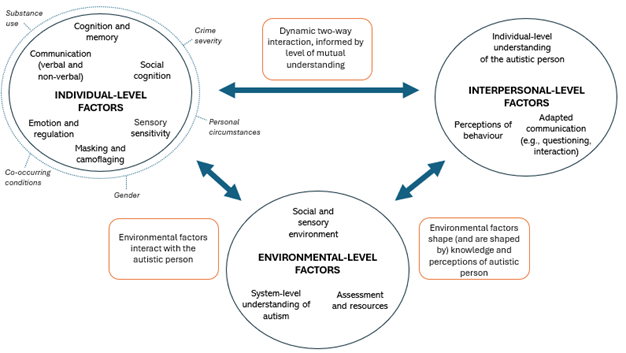
Figure 1. Individual, Interpersonal, Environmental (IIE) Vulnerability Model (Bagnall & Maras, in press)
Individual vulnerabilities are psychological, cognitive and social factors that are experienced and displayed by the autistic person. These include differences and difficulties in social communication style, cognition and memory, emotion and emotional regulation, sensory sensitivities, and social behaviour (e.g., masking). Examples of broader ‘contextual’ individual factors which are likely to further impact vulnerability in various ways are shown on the dashed outer-line. For example, gender is included, as autistic women experience greater levels of victimisation (Cooke et al., 2025) and are also less likely to be diagnosed or recognised as autistic (Cook et al., 2024; Brickhill et al. 2023). The IIE Model proposes that individual-level vulnerability factors contribute to autistic people’s participation in the CJS but crucially are responsive to the broader interpersonal and environmental context (see below).
Interpersonal vulnerabilities refer to how the autistic person is understood, perceived and communicated with by those interviewing, examining, or observing them. This includes communication partners’ general understanding of both autism generally and the autistic person as an individual, which in turn relate to how the autistic person is perceived (e.g., Burleigh et al., 2025). Furthermore, the level of autism-adapted communication can be a key interpersonal factor. Gold-standard police interviewing practice recommends open, non-leading questions (Ministry of Justice, 2022; College of Policing, 2022). However, autistic people’s memory often benefits from structure and cues to recall information (Maras, 2021). Indeed, evidence-based interviewing practices can be used to assist autistic people to give evidence, such as breaking down events into more manageable segments (Maras et al., 2020) and sketching to aid recall (Mattison et al., 2016). As one of our autistic participants who took part in an (un-adapted) mock-suspect interview in police custody reflected:
“I think when there’s lots and lots of detail it’s difficult just to be given a “tell me what happened”. Because it’s ‘which bit?’, ‘where do you start?’” (Bagnall et al., 2025)
Indeed, experimental studies in the lab have shown that autistic mock-suspects provide fewer innocence-supporting details than non-autistic participants (Bagnall et al., 2023, Young & Brewer, 2019). The level of adaptive communication practice is therefore a vulnerability factor – if adaptive practice is not used, autistic people may provide less complete and convincing evidence. In turn, this may inform others’ perceptions of the autistic person’s credibility (see Maras et al., 2021). This brief example shows how adapted communication intersects with individual and interpersonalvulnerabilities, shaping autistic people’s participation in the CJS.
Environmental vulnerabilities encompass the physical and social environment, system processes, and resources within the specific CJS context. For example, autistic people describe experiencing (sometimes interlinked) sensory and social overload in CJS environments such as police custody and courts (George et al., 2020; Holloway-George et al., 2025) which can impact their ability to engage and communicate in forensic processes (Slavny-Cross et al.,2023). Furthermore, an autistic person’s diagnosis may not be identified due to inadequate police custody-based screening, or because the autistic person is unaware or unwilling (e.g., for fear of stigma) to disclose this to professionals (see Crane et al., 2016; Slavny-Cross et al., 2023). As an autistic person who had given witness evidence in Crown Court reflected:
“it wasn’t made clear to me from the outset that [being autistic] was something I needed to have declared up front […] the questions before about access had all been about mobility …” (Bagnall et al., under review)
Effective screening is important in two key ways. First, it may highlight the need for adapted interview practice as well as special measures (various forms of adaptations and support) in court. Given that responsibility for special measures is spread across multiple organisations (the police, the Crown Prosecution Service, and Witness Service) and cases can “slip through the net” (Poppleton & Molina, 2021, p.25), needs must be identified early, accurately, and acted upon. Second, diagnostic disclosure informs and improves the way autistic people are perceived in the CJS (Burleigh et al., 2025; Maras et al., 2019) and beyond (Sasson & Morrison, 2019). This illustrates how autistic people’s individual-levelvulnerabilities may be exacerbated by environmental-level processes (such as screening) as they interact with interpersonal-levelfactors (how they are understood, supported, and communicated with).
Implications for best practice
The IIE Vulnerability Model illustrates that appropriate adaptations and processes should assist autistic people to be able to give evidence in the CJS more fairly and effectively. As described in the earlier sections, implications for best practice include autism-informed screening and role-specific training in police custody, alongside tailored interviewing methods such as the Witness-Aimed First Account (WAFA; Maras et al., 2020) in police interviews, early identification of needs for special measures in court, and environmental adaptations for socio-sensory stresses at all stages.
Conclusion
While navigating the CJS is challenging for anyone, autistic people should not face additional barriers because of their autism. It is crucial to understand how an interplay of individual, interpersonal, and environmental factors can contribute to autistic people’s vulnerability. Thinking about vulnerability in this way can help to identify barriers for autistic people, and enable effective participation in potentially life-changing processes throughout the CJS. Our aim with the IIE Vulnerability Model is to provide a useful tool for autistic people, researchers, and practitioners – including those who are autistic – to guide research, policy, and practice.
Bibliography
Bagnall, R., Cadman, A., Russell, A., Brosnan, M., Otte, M., & Maras, K. L. (2023). Police suspect interviews with autistic adults: The impact of truth telling versus deception on testimony. Frontiers in Psychology, 14, 1117415.
Bagnall, R., Crane, L., Burrell, F., Matterson, M., & Maras, K. (under review). “The extreme end of a world”: Autistic community and justice system professional perspectives on court proceedings in England and Wales.
Bagnall, R., & Maras, K. (2025). Autism and Police Interviewing: An individual, interpersonal, and environmental model of vulnerability. In The Routledge Handbook of Disability, Crime, and Justice (pp. 197-217). Routledge.
Bagnall, R., & Maras, K. (in press). Autism and giving evidence in the justice system: Individual, Interpersonal, and Environmental factors. In Expert Evidence: A Practitioner’s Guide to Effective Psychological Evidence in Judicial Settings.
Bagnall, R., Russell, A., Brosnan, M., & Maras, K. (2025). ‘I’m listening to you, but I can’t hear you’: perspectives of autistic adults, investigators and support staff on police suspect interviews. Psychology, Crime & Law, 1-28.
Brickhill, R., Atherton, G., Piovesan, A., & Cross, L. (2023). Autism, thy name is man: Exploring implicit and explicit gender bias in autism perceptions. PLoS One, 18(8), e0284013.
Burleigh, L., Weber, N., Lim, A., & Young, R. L. (2025). Perceived remorse and education: their impact on mock juror judgements of autistic individuals. Journal of Autism and Developmental Disorders, 1-12.
Cook, J., Hull, L., & Mandy, W. (2024). Improving diagnostic procedures in autism for girls and women: A narrative review. Neuropsychiatric disease and treatment, 505-514.
Cooke, K., Ridgway, K., Pecora, L., Westrupp, E. M., Hedley, D., Hooley, M., & Stokes, M. A. (2025). Gender Differences in the Prevalence of Autistic Experiences of Interpersonal Violence: A Mixed Methods Systematic Review and Meta-Analysis. Review Journal of Autism and Developmental Disorders, 1-20.
Cooper, D. S., Uppal, D., Railey, K. S., Blank Wilson, A., Maras, K., Zimmerman, E., Bornman, J., & Shea, L. L. (2022). Policy gaps and opportunities: A systematic review of autism spectrum disorder and criminal justice intersections. Autism, 26, 1014-1031. https://doi.org/10.1177/13623613211070341
Crane L., Maras K. L., Hawken T., Mulcahy S., Memon A. (2016). Experiences of autism spectrum disorder and policing in England and Wales: Surveying police and the autism community. Journal of Autism and Developmental Disorders, 46(6), 2028–2041. https://doi.org/10.1007/s10803-016-2729-1
Dehaghani, R. (2021). Interrogating vulnerability: reframing the vulnerable suspect in police custody. Social & Legal Studies, 30(2), 251-271.
George, R., Crane, L., & Remington, A. (2020). ‘Our normal is different’: autistic adults’ experiences of the family courts. Journal of Social Welfare and Family Law, 42(2), 204-220.
Holloway-George, C. A., Munro, N., Jackson, J., & Ropar, D. (2025). Experiences of Autistic People in Police Custody: The Need for Adjustments to Improve Participation in the Custody Process. Journal of Autism and Developmental Disorders, 1-13.
Maras, K. (2021). Obtaining testimony from autistic people. In Handbook of autism spectrum disorder and the law (pp. 145-183). Cham: Springer International Publishing.
Maras, K., Dando, C., Stephenson, H., Lambrechts, A., Anns, S., & Gaigg, S. (2020). The Witness-Aimed First Account (WAFA): A new method for interviewing autistic witnesses and victims. Autism, 24(6), 1449-1467. https://doi.org/10.1177/1362361320908986
Maras, K., Marshall, I., & Sands, C. (2019). Mock juror perceptions of credibility and culpability in an autistic defendant. Journal of autism and developmental disorders, 49(3), 996-1010.
Maras, K., Norris, J.E., Nicholson, J., Heasman, B., Remington, A. and Crane, L., 2021. Ameliorating the disadvantage for autistic job seekers: An initial evaluation of adapted employment interview questions. Autism, 25(4), pp.1060-1075.
Mattison, M., Dando, C. J., & Ormerod, T. C. (2018). Drawing the answers: Sketching to support free and probed recall by child witnesses and victims with autism spectrum disorder. Autism, 22(2), 181-194. https://doi.org/10.1177/1362361316669088
Poppleton, S. and Molina, J. (2021). Next Steps for Special Measures: a Review of the Provision of Special Measures to Vulnerable and Intimidated Witnesses. Available at: https://victimscommissioner.org.uk/document/next-steps-for-special-measures-a-review-of-the-provision-of-special-measures-to-vulnerable-and-intimidated-witnesses/
Sasson, N. J., and K. E. Morrison. 2019. “First Impressions of Adults With Autism Improve With Diagnostic Disclosure and Increased Autism Knowledge of Peers.” Autism 23, no. 1: 50–59. https://doi.org/10.1177/1362361317729526.
Slavny-Cross, R., Allison, C., Griffiths, S. and Baron-Cohen, S., (2023). Are autistic people disadvantaged by the criminal justice system? A case comparison. Autism, 27(5), pp.1438-1448.
Woodhouse, E., Hollingdale, J., Davies, L. et al. (2024). Identification and support of autistic individuals within the UK Criminal Justice System: a practical approach based upon professional consensus with input from lived experience. BMC Medicine, 22, 157. https://doi.org/10.1186/s12916-024-03320-3
Young, R. L., & Brewer, N. (2020). Brief report: Perspective taking deficits, autism spectrum disorder, and allaying police officers’ suspicions about criminal involvement. Journal of autism and developmental disorders, 50(6), 2234-2239.

